Sunday, October 20, 2024

50 Years of MW DX-ing - My Radios

In my anniversary series, I've touched on the various receivers I've owned. Although many have been reviewed, some have not. What follows is a detailed list of the communication receivers in my possession, each with a brief assessment of their pros and cons, and links to my reviews where available. I was quite surprised to discover that I have owned 40 different brands or models of receivers, amounting to a total of 54 receivers! Please be aware, this is a lengthy post!

Trio-Kenwood QR-666:
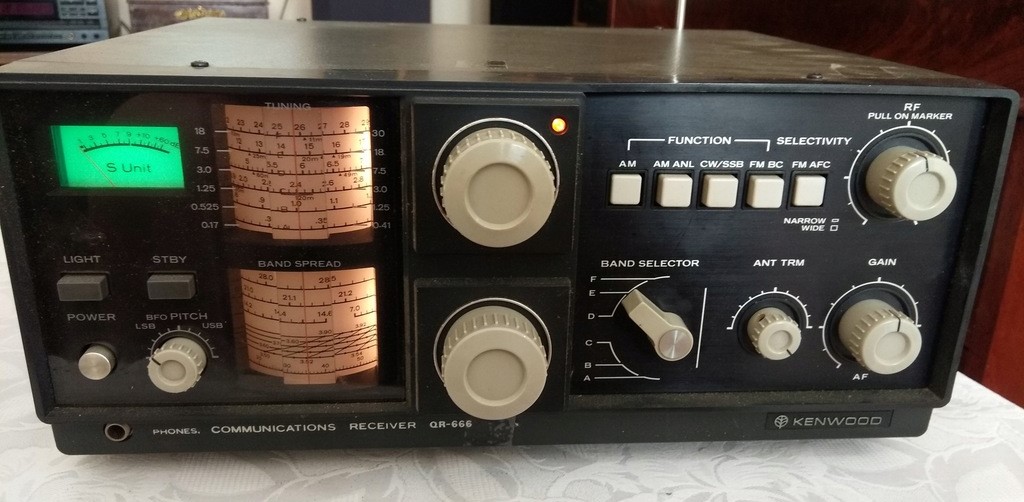
Source: Allegro Archiwum


I purchased my first communications receiver in August 1974. It was quite sensitive, yet the frequency readout accuracy was terrible. Surprisingly, it lacked a line-out, preventing me from connecting a tape recorder.


Yaesu FRG-7:

Source: richy-schley.de


I purchased my sole Yaesu receiver in 1976 and sold it in 1979. For some reason, its successors never caught my interest. The frequency readout was reasonably accurate. The Wadley Loop technique it employed enhanced frequency stability and precision, which was crucial. However, tuning was somewhat laborious. The AM filter was quite broad, but the raadio did feature a line-out!

Redifon R50M:

Source: seefunknetz.de


Bought for a modest sum around 1977/1978, it never saw much use. Cool hinged cover on top though.

Drake SPR-4:

Source: Universal Radio


The radio was a coveted item among DX-ers, yet it was out of reach for many due to its cost. I acquired mine in 1980, if memory serves me right. The frequency readout was exceptionally accurate, more so with the optional Crystal Calibrator installed. Similar to the FRG-7, tuning required constant adjustments to the preselector, which made quick scanning a challenge. The AM filter's width was too wide, prompting me to modify the hardware to enable the use of the SSB filter in AM mode. The Drake was in my possession for approximately 15 years.

National HRO-600:

Source: hvde.nl


Purchased from another DX enthusiast in 1980, the receiver is excellent on its own. However, the decadic tuning renders DX-ing quite impractical, so I didn't use it much.

JRC NRD-515:

Source: N9EWO


I purchased it second-hand in 1995 and sent it to a DX-er in Sweden for the removal of the MW attenuation pad and other enhancements. It served as an excellent receiver for several years.

AOR AR7030:

Source: RigPix Database


I owned two, purchased in 1996 and 1997. Both were upgraded to the Plus version and equipped with superior filters than the standard ones. They were excellent receivers, although not the most sensitive in their category. The menu system left something to be desired, but they did come with a remote control. I kept them for just about 10 years.

Sony ICF-2010/2001D:
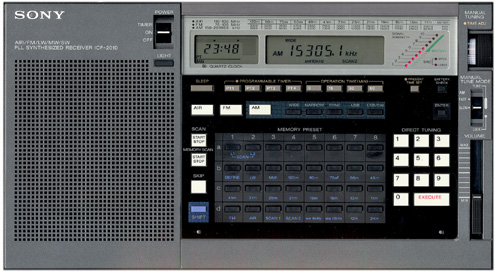
Source: Universal Radio


In 1996, I purchased two second-hand units and had them modified by Kiwa Electronics. They were excellent receivers, although the audio quality was less impressive.

Kneisner & Doering KWZ 30:

Source: RigPix Database


I believe it was around 1997 or 1998. The device was launched in 1997, and it was the first DSP receiver I ever owned, a gift from Austria. It had excellent performance, outstanding audio, and very precise filters. However, the menu system was not user-friendly, and it needed at least one repair. Due to its unreliability, I decided to sell it, although it did serve me well until 2000.

Palstar R30:
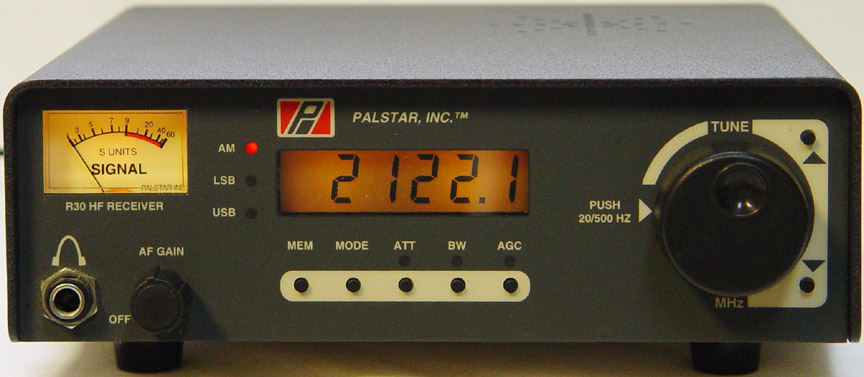
Source: Universal Radio


A compact radio with effective filters and clear, albeit thin audio. The ergonomics left room for improvement. Acquired in 2001, it served me well for a couple of seasons but ultimately, it was a bit too basic.

JRC NRD-525:

Source: Fenu-Radio


What a radio! It boasts exceptional sensitivity, excellent ergonomics, and has been a reliable tool for numerous DX-peditions. Between 2001 and 2007, it was my receiver of choice, and I owned three of them! It significantly outperformed the...

JRC NRD-545:
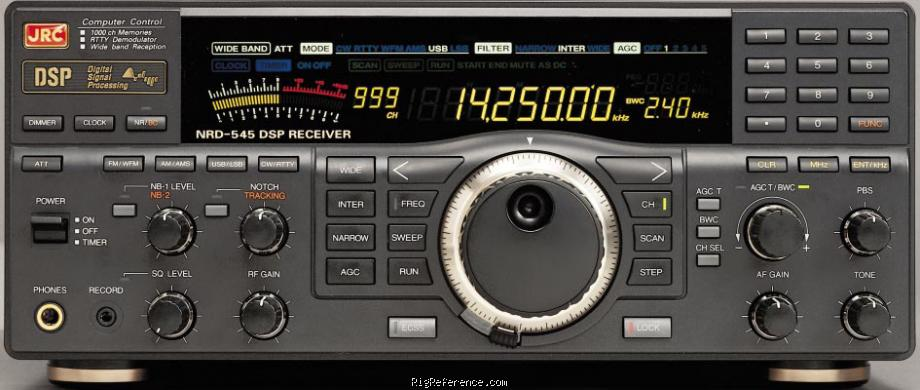
Source: RigReference


Alright, it was digital, attractive, sensitive, and costly. Regrettably, the audio quality was subpar, and the digital bandwidth filters often allowed distortion from adjacent frequencies at high signal levels. I can't recall the exact purchase year—possibly 2002? I ended up parting with it after a year or two.

Racal RA-6790/GM

Source: militaryradio.it


A 19-inch professional receiver, equipped with a full filter bank, delivered outstanding reception and audio quality. Yet, it becomes apparent that such professional receivers are designed to monitor specific frequencies rather than for broad tuning as a DX enthusiast might do. Purchased in 2003/2004, it had a relatively short lifespan in my shack.

EAC (Collins) R-390A:


My initial "boatanchor" radio, acquired since the Redifon R50M in 1978, was purchased in 2004 and remains with me to this day. Any takers? Notably sensitive, it was procured specifically for DX-ing. Yet, I quickly realized that despite being an impressive receiver, it pales in efficiency when compared to contemporary solid-state receivers. Here are my reflections on it..

Telefunken E1501
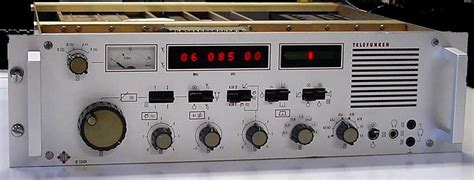
Source: kccweb2.cafe24.com


Purchased in 2004 from eBay, it had a few imperfections, such as a weakened MW band, which Dallas Lankford repaired. Similar to the Racal, its user interface was not tailored for the DX-er, leading me to eventually part with it.. A write-up is here.

Etón E1:

Source: RigPix Database


A portable radio boasted remarkable sensitivity (-115 dBm), yet it was paired with an exceedingly delicate front end. As a result, the additional gain was not particularly useful. I owned it for a year or two around 2004 before selling it. My detailed impressions are available.here.

Icom IC-R75

Source: Radiomuseum.org


Over those years, I purchased a significant number of receivers. The R75 was highly favored by DXers, and Kiwi Electronics provided an affordable upgrade kit. I acquired the receiver from Universal Radio and arranged for it to be sent to Kiwa for the modifications.. I wasn't entirely satisfied with it though. I was exploring other Icom receivers, or more accurately, transceivers!

Icom IC-746Pro (IC4000)

Source: Universal Radio


Another acquisition from 2004. I purchased two! They may well be the finest HF receivers I have ever owned. However, it took some modifications to get it there. Once again, Dallas Lankford was my savior. They served me exceptionally well until they became obsolete, almost instantly, with the emergence of SDR technology.

Icom IC-703


My fascination with Icom persisted. In early January 2006, I purchased an affordable one from eBay and requested Dallas Lankford to examine it. Once more, the wizard enhanced its sensitivity and swapped out filters to better suit MW DX. It's an exceptionally fine portable radio. I owned it for a couple of years.and made a write-up on it.

Icom IC-7000

Source: Icom


In 2006, I purchased this portable transceiver from a Norwegian retailer. It's an incredible radio, although it has mediocre sensitivity on longwave.One of my best. It would have remained in my shack if not for SDR.
 

RF Space SDR-IQ
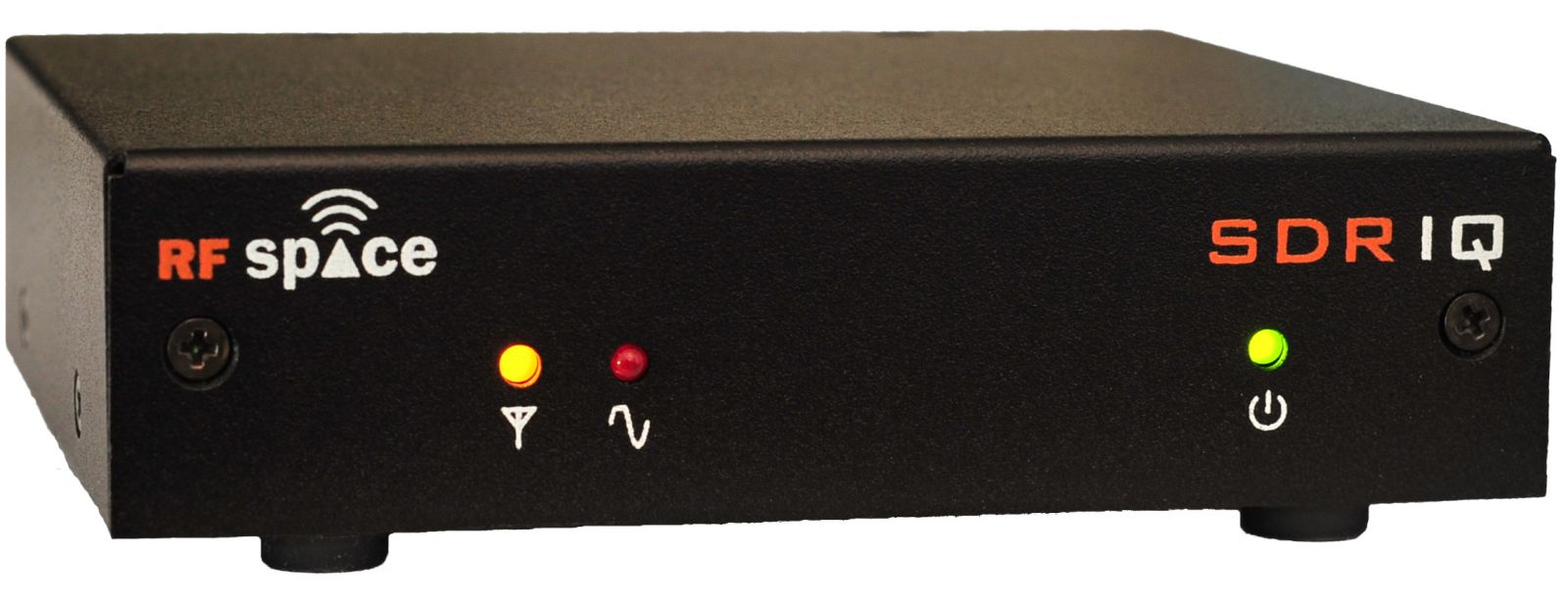
Source: RF Space


It was a game-changer. Purchased in 2007, it was meant to complement another radio with its vast 192-kHz spectrum. Within moments, it became clear that this device rendered all my other radios nearly obsolete. Consequently, I acquired two of them. My write-up sums it up: "The generation of SDRs that the IQ represents is not evolutionary, it's revolutionary with its ability to record a spectrum as wide as 190 kHz. It is an excellent DX receiver as well although there is room for improvement on the user interface, sensitivity and strong signal handling. But the pros massively outnumber the cons". Little did I know about what was to come.

Microtelecom Perseus

Source: Microtelecom


The Perseus came! It is probably the most influential receiver for DX-ers ever. I acquired my first Perseus in autumn 2007. As of October 2024, I operate five Perseus receivers continuously, with an additional one on standby for malfunctions. Initially, it offered a maximum sample rate of 400 kHz, twice that of the SDR-IQ, which was later increased to 800 kHz and then 1600 kHz. Its success was partly due to the availability of an SDK, enabling control by other software. In 2011, the introduction of Jaguar was crucial in maintaining the Perseus as the preferred SDR for many MW DX-ers, even 17 years post-launch.

The story might have concluded there. Yet, the quest for newer and better technology persists. Continue reading...

Quicksilver QS1R
Source: Quicksilver


Purchased in 2008, I saw potential in this device with its 16-bit ADC and solid construction. It had software under development (SDRMAX) that unfortunately ceased. The sensitivity was mediocre due to the absence of internal preamplification, but an external preamp rectified this problem. Regrettably, the discontinuation of suitable software support rendered the device obsolete.

Winradio G31DDC Excalibur

Source: Winradio


In the summer of 2010, a reputable manufacturer offered an SDR with a 16-bit ADC at an affordable price. However, many issues arose. The IQ recordings (or DDC recordings in Winradio terminology) lacked scheduling capabilities and did not include time or date stamps. For an extended period, it was unsupported by any other software, which made it virtually useless for MW DX-ing. Consequently, I sold mine. Recently, it gained support from SDR Console, prompting me to purchase a used one once more, though it remains largely unused.

Winradio G33DDC Excalibur Pro

Source: https://www.kmitocty.cz


It turned out that the G33DDC, almost double the price, had the essential features I desired in the G31DDC. Therefore, I purchased one in 2011. However, it lacked support for other software, and I detested the Winradio GUI, which was utterly terrible. Consequently, I sold it..
 

RF Space NetSDR

Source: RF Space


In November 2011, I experienced my second encounter with an RF Space SDR. The NetSDR was rather pricey, yet it boasted impressive build quality and featured an Ethernet connection for PC or LAN. It was compatible with the SDR Console. While its sensitivity was not outstanding, the overall package was commendable. Nevertheless, it was sold a short while ago..

Afedri SDR-net

Sitting on top of a Perseus


In 2012, I purchased this SDR with a relatively novel design. It offered adequate bandwidth for MW DX and featured an ethernet interface, but its front end was fragile. It performed well when the general signal levels were moderate and benefited from extensive software support. However, it did not remain in my shack for long.

RF Space Cloud-IQ

Source: Fenu-Radio


Oddly, I realized I had never written a review for this outstanding SDR, even though I owned two of them, purchased in 2015. Its sensitivity was remarkable, and it could be connected to "any" receiver on the LAN using an ethernet cable, similar to the NetSDR mentioned earlier. Unfortunately, they were overshadowed by the Perseus/Jaguar combination and never truly got the chance to shine as they should have. Ultimately, they were sold and sent off to Miami.

KiwiSDR

Source: kiwisdr.com


The KiwiSDR stood out from the rest. Not only was it a highly capable SDR, but it also featured a web interface and even included a server, allowing it to be accessed over the WAN. I purchased two units, the first one in 2016, and primarily set them up for use by external DX enthusiasts for several years.. My verdict on the Kiwi was positive, although there were quality issues with the Beaglebone board on which its OS relied upon.Ultimately, due to various reasons, I decided not to continue managing the service, and as a result, the Kiwis were either sold or discarded.

Airspy R2 + Spyverter
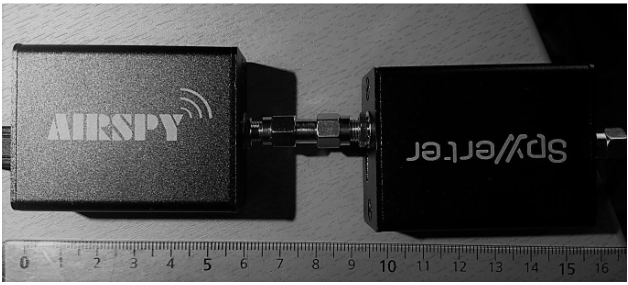


Purchased in the autumn of 2017. It was small, extremely so, but was it good? For various applications, certainly. However, for mediumwave DXing, absolutely not. I have let go of it.


Airspy HF+, HF+/Discovery

HF+


I acquired my HF+ in January 2018, which features two antenna inputs and a metal casing. I found the SDR# software to be unsatisfactory. However, the sensitivity became excellent after a hardware modification, as long as there were no strong signals within the band. Nonetheless, the question remains whether a MW DX-er can be content with a 660 kHz bandwidth, which was later increased. Certainly not! Why did I purchase the successor to the Discovery? It's a mystery. It resembled the HF+ in many ways, yet it had just one antenna port, a plastic casing, and a slightly broader bandwidth. Now, both are no longer in my shack.

SDRPlay RSP1A

RSP1A with 3rd-party metal casing


We're writing March 2018, and I've bought something that I knew will never match the Perseus SDR. Yet, it covers the FM and (and a lot above it), and I had started to grow an interest in FM DX-ing. When I dotted down my impressions, I found that the RSP1A could not compete with the Airspy HF+ on weak signals, and failed miserably on large signal levels on MW. Yet, it copes OK on FM with a large bandwidth. I still have it.

ColibriNANO

Source: Expert Electronics


The ColibriNANO succeeded the ColibriDDC and provided sufficient bandwidth for my needs. I purchased it in spring 2019. Despite its remarkably compact size, the sensitivity was subpar, and the user interface was extremely inadequate, seemingly a knock-off of the SDRMAX software for the QS1R. It is certainly an SDR to avoid.

SDRPlay RSPdx - RSPdx-R2
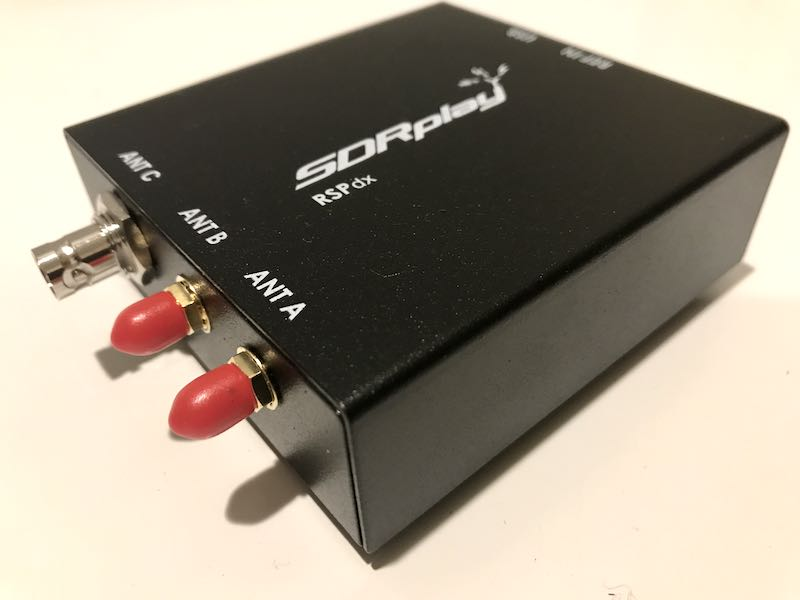
The RSPdx-R2 looks identical


SDRPlay does not prioritize visual aesthetics for its budget. The RSPdx, released in fall 2019, hopefully benefited from my participation in the pre-production testing. It's a good all-purpose SDR, offering great value. Its "HDR" feature enhances sensitivity and provides additional protection for MW and LW signals. The RSPdx-R2, which I've also evaluated in the pre-production process, further improves performance. However, it cannot match the large signal handling capabilities of a genuine 14- or 16-bit ADC. My primary use for them is FM DXing, taking advantage of their expansive 10 MHz bandwidth (my setup includes three RSPdx units and one RSPdx-R2).

Elad FDM-S3

Source: Elad


Purchased in 2020 for its advertised 24 MHz bandwidth, covering the entire FM band, and boasting excellent build quality with a 16-bit ADC. However, utilizing the full 24 MHz bandwidth demands a powerful PC, which I assumed I had acquired, but that was not the case. Consequently, I was limited to using only 12 MHz, marginally more than the RSPdx, yet at four times the cost. Additionally, it lacked support for HDSDR, the software I prefer for IQ recordings on FM, leading to its sale to a buyer in Finland.

RX666/RX888

The RX666 


The RX888


It's a Chinese construction based on an Italian design. I purchased the RX666 in 2020 and the RX888 shortly thereafter. The lack of transparency from the manufacturer is concerning. The cost is remarkably low for the sophisticated 16-bit ADC it employs. It was infamous for failing to reconnect after a PC reboot. I sold both because they did not live up to my expectations. On a broader geo-economic level, personal considerations ought to be factored into the balance sheet. For example, we must demand transparency and quality in the products we endorse, irrespective of the manufacturer's location. Would we accept such a product if it came from an anonymous, concealed manufacturer in, say Germany?

RigExpert Fobos SDR


With a frequency range of up to 6 GHz (more than I required) and a 50 MHz bandwidth (questioning if it could sample the FM band), the decision to purchase was easy, considering the company's standing among radio enthusiasts. However, I ended up returning it for a full refund. Why?Read this. 

Saturday, October 19, 2024

KONG49 - Day Two

Another pleasant day with mild temperatures of 9-10 degrees Celsius and minimal wind. The overnight recordings were unremarkable; only the most robust dominant signals from North America were detectable. Furthermore, a new noise issue is obscuring the weaker signals. Details on this will follow. Additionally, there were two M-class solar flares recently, which really did not do us any good.

Conditions towards Asia in the afternoon were extremely poor.

I've previously mentioned our need to vacate Mount Loran, the site of an old Loran C transmitter. Over the past few years, I've been searching for a suitable alternative location. Today, we investigated the most promising option. It appears we've found it and have dubbed it Loran D. We're scheduled to conduct a test there on Sunday. The location allows for the installation of a 946-meter beverage antenna oriented at 312 degrees, compared to Mount Loran's 306 degrees. The path mainly covers lossy terrain, but both the start and end points are heavily saturated with water, promising excellent grounding. In theory, this should be the perfect solution..

Here is where Loran D starts

Additionally, the initial setup area with all the equipment (PC, Perseus, GPS, modem, etc.) is out of sight, which is advantageous.

Thus, a portion of the afternoon was dedicated to assembling the required equipment: PC, Perseus, modem, GPS, and an SSD, followed by conducting test runs.

For dinner, we began with cured meats and beers. The main dish consisted of fried salmon seasoned with red chili, ginger root, garlic, sesame seeds, sesame oil, and fresh thyme, accompanied by fried bacon and tagliatelle generously coated in pesto.

Salmon before frying

Salmon while frying


A white wine was necessary for this course, and we (OJ) made a wise choice as usual with Calles Riesling. We haven't fully decided on the dessert yet; there's only so much room in our stomachs. Perhaps we'll consider chocolate pudding later.Or perhaps not, since both my companions are snoring away on their couches. It's time for me to find my bed...

50 Years of MW DX-ing. 2 - The 70's

Part 1 is available here. 

The summer of 1974 was hot. And it brought change.

No one had systematically attempted MW DX-ing in the extreme north of Norway before; it was truly uncharted territory. However, Finnish DX-ers had ventured to northern Finland for several years with significant success. They discovered that stations from the western part of North America and Alaska were frequently received, unlike in the south where East Coast stations predominated.

Arvid Frøsland, a seasoned MW DX-er, chose to spend a few years up north as a teacher for various reasons. He convinced a young man, Ole Forr, to head north too, as a student. Arvid then asked me if I was interested in expanding my horizons as a DX-er by venturing into MW. Indeed, I was! At that point, I was nearly ready to abandon the hobby, but instead, I gathered my savings and purchased the finest communications receiver my limited budget could afford, the new Trio-Kenwood QR-666. Additionally, I attempted to set up a more appropriate antenna. However, with no knowledge of antenna design, I ended up stringing a 30-meter wire haphazardly across our garden. There was no coaxial cable, no grounding—just the antenna wire running through the window to the antenna input. I recall receiving the QR-666 sometime in August.

My first communications receiver (photo: Allegro Archiwum). Frequency readout accuracy was second to...anything!

And we started waiting for NA (North American) stations.

For those accustomed to my stories about KONG HQ, I must clarify that I wasn't there. My home was in Berlevåg, a quaint fishing village situated 35 kilometers to the northwest. At that time, visiting our house at Kongsfjord wasn't feasible. The reason? I was too young to drive, and there was no car in my family.

During the wait, I had ample opportunity to discover three Shortwave bands new to me: the tropical bands (60, 75, and 90 meters). I encountered numerous intriguing stations broadcasting from Africa, Asia, and Australia. Meanwhile, in southern Norway, enthusiasts were actively logging Latin American stations, yet only a few were detectable at my northern location..

We waited impatiently. September passed without any signals, and October was quiet until the 15th when I finally received a clear ID from KJNP in North Pole, Alaska on 1170 kHz - my first catch! After that, the stations began rolling in from Alaska, Manitoba, Saskatchewan, Alberta, Minnesota, Iowa and more. I didn't pick up a single Eastern Standard Time station that autumn. Many of these stations had never been heard in Norway before. It was tough competition with Arvid and Ole, who were located 175 km to my south-west. Notably, some dominant stations were from Greenland - AFRTS ran two stations out of Thule Air Force Base (1210 and 1425 kHz), and there was one elusive station on 1420 kHz from Søndre Strømfjord, which I managed to hear once. By season's end, I had 70 QSLs, a respectable tally for a beginner turned seasoned listener.

Throughout the autumn and winter, I also delved into Japan's MW stations. The QSL cards they offer were, and continue to be, unparalleled. It was, and remains, a delight to tune in, even for someone who does not comprehend the language.

After Christmas that year, or more precisely in early January 1975, I had my first opportunity to meet fellow DX-ers. Arvid hosted a brief DX-pedition at his home in Lakselv, where we, the younger enthusiasts, met the old ones—who were in their twenties, weren't they? A few months prior, an airport had been inaugurated in Berlevåg, and I flew to Lakselv on a Twin Otter operated by the regional airline Widerøe. The DX-pedition, dubbed LAX, was immensely enjoyable and definitely provided an additional surge of motivation.

In the autumn of 1975, I moved from Berlevåg to Vadsø to attend secondary school. I brought along my QR-666 radio, but it struggled with the strong signals from the nearby 20-kW NRK transmitter, which was broadcasting at 701 kHz. Occasionally, I managed to engage in DXing from home. More significantly, I was organizing a sequel to the DX-pedition in Lakselv, this time in Kongsfjord. Initially, we were five enthusiasts, traveling from as far as Oslo, ready to spend several days around New Year's Eve. However, we ended up being four, as the last person to join us encountered road closures but enjoyed the hospitality of my parents' warm home.

Arctic weather can be quite the adversary; indeed, it was ferocious. Our residence, a shelter to a family of seven since the early 1920s, lacked insulation and had leaky single-pane windows. The relentless winds, blowing at 20-25 m/s, coupled with temperatures plunging to -10 to -15 Celsius for days on end, resulted in a markedly low comfort level. Indoors, we often faced single-digit Celsius temperatures. The accompanying photo of Ole (right) and myself (and no, that's not Robert Plant) is not an overstatement. You can only imagine our trips to the outdoor toilet! Aptly, our DX-pedition was named WINDX. We had a power outage which was impossible to repair in the extreme weather conditions, so we retreated by bus to the welcoming warmth of my parents' home..

Me and Ole in sleeping bags. They provided a bit of warmth even in the daytime. (photo: Arvid Frøsland)

Precisely one year later, I repeated the same stunt with another DX-er, and experienced exactly the same. After our 1976/1977 adventure, it would be another 20 years before Kongsfjord would re-emerge as a site for a DX-pedition..

In 1977, I switched from the QR-666 to the Yaesu FRG-7, which offered a superior frequency readout and a preselector that was less susceptible to overload from the MW transmitter in Vadsø. However, the antenna options were limited, so the most successful DX receptions occurred during the occasional weekends, and Christmas holidays, at my home in Berlevåg..

At that time, I experienced my first valve set when I purchased a Redifon R50M from a radio enthusiast in Vadsø. It functioned properly, but it was quite a behemoth!

After finishing secondary school, I spent the autumn and winter of 1978-79 in Lillehammer, just north of Oslo, where I once again had the opportunity to join other DX-ers for a unique weekend DX-pedition. My Lillehammer den offered no amenities for DX-ing. Instead, I found myself falling deeply in love with red wine toddy and the tunes of Steely Dan. To this day, I remain a devoted fan—though not of the red wine toddy.

I submitted my final reception report of the 1970s on December 31st and received the most beautiful letterhead for my QSL collection as an award.


Below is a selection of the QSL's I received during 1974 and 1975.

QSL from my first reception of a North American MW station. And the most likely to show up. Still on the air.

My first QSL from a North American MW station! Mostly regarded as a non-verifyer at the time. Later moved to 1290, now gone.


Most voluminous QSL from a North American MW station! Alas, the tapes Jeff promised never materialized. Long gone.


One of the coolest QSL cards in my collection. Still on air, with higher power.


First Californian QSL. Probably the most common Californian MW station here.

To be continued.


KONG49 - Arrival Date!

Yesterday marked our arrival day!

I reached KONG HQ around noon on Friday, while Ole and OJ landed from Kirkenes airport two hours later, driving the tiniest rental car we've ever encountered here.

The day unfolded without any particular events, leading us to a 7 PM dinner featuring the customary homemade fish gratin, brimming with a variety of ingredients like bacon, ginger root, carrots, onion, leek, macaroni, and of course, fish. The wine of choice was Kim Crawford. For dessert, we indulged in store-bought chocolate pudding and custard, complemented by Amaretto and Grappa.

The weather has been unusually mild for October, with temperatures significantly above the average, hovering around 8 degrees Celsius, mostly cloudy (but clear in the evening) and breezy, even reaching just over 10 degrees during the night. We're not complaining, though.

Overnight, there's been a notable improvement in signal levels. "Notable" doesn't necessarily mean "optimal conditions," but it suggests we might be on the path to something promising.

Today's agenda includes a drive to Berlevåg to collect the rest of the seafood. En route, we plan to scout an alternative remote location to the Mount Loran site, which has been our base since 2016. 

To cap off, here are a couple of snapshots from last evening: a nearly full moon at 97.6% illumination, and a glimpse of the surrounding locale.


Saturday, October 12, 2024

KONG49 - Final Preparations

KONG49 is just six days away! I'm here for a day, double-checking that we're stocked up on food and drinks. Arrived on a blustery, rainy Friday. It's peaceful this morning, but don't be fooled – the wind's just taking a quick nap before it unleashes gale-force tantrums later today. At least the skies are clear and it's dry. A brisk 4 degrees Celsius today, and it looks like the thermometer's flirting with the warmer hues for the upcoming days.

From my entrance, facing south-east

Also from my entrance, facing south

Here's a brief summary of our current food and drink options. Shopping is still in progress (with some items stored in the freezer):


Friday, October 11, 2024

50 Years of MW DX-ing. 1 - The Beginning

This October marks my golden jubilee of DX-ing on the Medium Wave band. But the journey began even earlier. This fall, I'm penning a series on my evolution as a DX-er to the present day. It's packed with tales of camaraderie, elusive stations, the evolution of radios and antennas, the highs and lows of activity, cherished QSLs, and much more. Yet, the story starts not in October, but a few years prior. In September, actually.

At the tender age of 14 in 1972, I stumbled upon the world beyond FM radio while scrubbing pots and pans on a Sunday after dinner. The only broadcaster in Norway, NRK, was airing a youth program that piqued my curiosity with tales of global stations. Our family's Radionette Menuett radio was a treasure trove of unexplored frequencies. With a little nudge from my dad, who rigged up a makeshift antenna, I embarked on an auditory adventure. It wasn't long before the exotic sounds of Radio Baghdad in English filled the air. Astonishing! The thrill of this discovery was all it took to hook me into the world of shortwave radio. I was sold.

The Radionette Menuett. It brought me the world (photo: snellingsmuseum.co.uk)

Just when I thought things couldn't get any stranger, I caught a broadcast from Radio Australia. Australia, of all places! It was as if the airwaves were playing a global game of tag. Soon after, my parents reclaimed their auditory pastime, bestowing upon me an old Radionette Kurér, the Rolls-Royce of portable radios back in its day. Armed with that and an outdoor longwire antenna, I was ready to tune into the world's secrets from my backyard.

The Kurér, the iconic RED Kurér, stands as the matriarch of portable radios in Norway. This name, steeped in history, will make a comeback as we delve into the tales of the 2000s. (photo: nrk.no)

I soon became a member of Norway's exclusive club for DXers, the DX-Listener's Club, and received the cool "call sign" LA-DX-719, or just -719 for brevity. It turned out many youngsters had tuned into the same radio show and joined the club too! We were lucky to meet seasoned DX-ers who warmly welcomed us and steered us clear of beginner's blunders, showing us the ropes of becoming adept DX-ers.


Back in the day, the Shortwave bands were bustling with international broadcasters, a scene quite different from today. Eastern Europe was a hotbed of activity with stations like Radio Moscow and Radio Station Peace and Progress (quite a name, right?), along with Radio Berlin International, Prague, Sofia, Bucharest, and Radio Tashkent adding an oriental twist. They were all on a mission to showcase the 'spectacular' technological strides of the 'socialist democracies' to the impressionable western youth.

On the flip side, there was Voice of America, BBC World Service, Deutsche Welle, Radio France International, Radio Sweden, Radio Japan, and a host of others, broadcasting their own narratives.

And let's not forget the shortwave stations catering to local listeners, particularly in South America, Asia and Africa.

Oh, and the jamming stations of the eastern bloc! They were like the party crashers, trying to silence the voices of Radio Free Europe and Radio Liberty at every turn.

I got my first taste of the MW band with the Kurér. Two stations stand out: One that almost every youngster in Europe listened to at the time - 208 Radio Luxembourg on 1439 kHz, "Broadcasting from the Grand Duchy of Luxembourg". How many mornings did I not walk to school in trance, caused by only a few hour's sleep. Deutschlandfunk (DLF) often graced the airwaves, transmitting from Cologne on 1267 kHz. They even featured a special DX program in Norwegian, crafted by DX-Listeners' Club members.

As time passed, the airwaves didn't offer much novelty. And after all, who's eager to listen to the tech triumphs of socialist democracies? I wanted to hear new stations. My enthusiasm began to diminish. But then, the summer of '74 rolled in. It was hot. And it brought change.

To be continued.

Sunday, October 06, 2024

SDRPlay SDRconnect Software - Preview 4

SDRPlay announced Preview 4 of their new software around 3 weeks ago. Considering that this is version 0.4, it is interesting to see the dedication from some users when they point out  how long everything takes. From what I know there hasn't been issued a timeline for when version 1.0 is ready to download. Yes, it takes time. No, I don't worry. While it is unlikely hat SDRconnect will supplant HDSDR and SDR Console as the software of choice for my four RSPdx and RSPdxR2, I find testing different receivers and software remains fascinating and provides a chance to offer feedback to the developers.

The new or enhanced features in Preview 4 that are intriguing for exploration include RDS encoding of FM signals, timed IQ or audio recordings, and Profiles. The official release notes are depicted in the graphic below.


I'm leaving RDS out this time since FM signals are many months away, I will focus on timed (or scheduled) recordings, and profiles. And I need to return to the server bit. It was last covered in my March 8 post.

Playback/Timed Recordings:

First: IQ recordings must obviously be made in the RF64 format, as one file I recorded was 5.1 GB (11:25 minutes) when I stopped recording. Playback control is still limited, but what is does, it does well. There is a playback bar indicating total length and progress. The playback can be looped. Still missing are pause/next/previous controls, playback bar time indicator (not to be confused with the running time of the playback) and the all-important user-configurable loop, much needed when you want to replay a small section many times to see if you can tweak and ID out of the mess. Moving back and forth on the playback bar with your mouse is instantaneous. The playback bar may seem small when trying to find the right point on a very long recording. But it can float, and you can make it as wide as your display. Or displays for that matter. Ensuring it returned to a "fixed" position was a completely separate issue.


I have been assured by the development team that the Timed Recordings feature is work in progress. The dialogue box is shown below, and it is at this stage relatively basic in that you can schedule only one recording at the time. You can of course add as many (surely there is a maximum number?) sessions as you like. Recurring recordings are said to be available in later versions.

The maximum duration of any timed recording session appears to be 60 minutes. That is an issue, but if recurring is enabled in later versions, not so much. The "Override = On" switch on the top right means that the recording session will override any other activity, like if you've tuned to a signal outside of the band defined by Profile when the recording is due to start. Tested - works (but not when connected to a server, see below).

If no profile is selected, SDRconnect will record the frequency spectrum displayed on the screen.


And speaking of profiles, it's a useful addition to the software. The feature is enabled when clicking  "Profiles" on the bottom right on the image below. I have defined one profile so far, "MW-AM" with the properties listed in the Device Profile Summary. Double-clicking the profile will engage that frequency range with properties.


Unfortunately, the profile will not define frequency steps (I would liked to have one MW profile with 9-kHz steps and one with 10), or alternative demodulators and bandwidths. In short, frequency steps and demodulators are not well implemented. It is if developers have decided that "MW DX-ers use AM, radio amateurs use SSB" etc. If I want to change from AM to SAM I'm back to 1-kHz steps. If I want to use USB or LSB to avoid close-channel interference I always have to change bandwidth from the default 1.8 to say 3.0 kHz, and frequency steps up from 0.1 kHz. Further software development should include more parameters to be included in each profile. After all, that's what a profile is all about - user-defined exceptions from the global settings. 

Server:

As mentioned in my March 8 blogpost, SDRconnect offers a server function, both for LAN and WAN connections, and they can also be combined. The server supports a maximum of 8 clients. It is somewhat ironic that in the world of graphical user interfaces, a command window har to be used to start the server. Luckily for us who have long forgotten the art of command lines (my first PC actually used a DOS 3.3 OS), the team has advised how to create a batch file to put on your desktop or elsewhere. There are a number of options to put in the command line, each preceeded by "--". So for instance since I'm a MW DX-er I have selected this command line: 

start .\SDRconnect --server --centerfrequency=875

As mentioned before, the first user always has control over the sample rate and frequency range - all the others have to follow. In addition, all users, both on the LAN and the WAN can connect to IQ in addition to Audio. In fact for WAN users, IQ connection is the de facto default choice since it's the first option you get in the drop-down window. You would need an extremely fast and stable internet connection for your server to entertain guest users that connected to the IQ option. Also, if the first/local user for some reason terminates SDRconnect, control is transferred to one of the other users, even WAN users (in my case, the third one to connect). I would much prefer that a LAN user (usually the owner) always has control.

IQ is the "Default" connection mode for WAN clients (the Audio option is found further down the drop-down menu)

There are options in the command line that can partially remedy any ill effects, like setting a defined number of users allowed, and an "exclusive" option. The latter will affect all clients including the owner so it's not really useful in my opinion.

I expressed my concerns on the SDRPlay reflector. The response I got from an SDRPlay team member was that if I feel client connections over IQ is bogging me down, "just restart the server". Or if I want control over my local LAN, "just connect as the first client". Well, I knew that, didn't I. I aimed to take an additional step to enhance the owner's control. Maybe I'm just asking too much. It will be interesting to hear how SDRPlay implements the server feature in their upcoming nRSP-ST.

Another thing: In its current version, Profiles do not seem to be supported when you're connected to the server, even as first user on the LAN. This will affect IQ (and audio) recordings as well, since you can't select a profile for timed recordings. The Profiles option is not greyed out however, It just doesn't respond to mouse or keyboard action. So maybe it is available further down the road. Or just a bug.

UPDATE on profiles when connected to the server: You CAN use profiles, but you need to define profiles within the type of connection. So, if you have defined a profile while running "direct" (without the server), you must define it again for when you're a client. The best way to avoid confusion is to label the profiles accordingly.